

PGDM Curriculum Explained: Subjects, Specializations and Learning Methods
Oct 27, 2026
Read More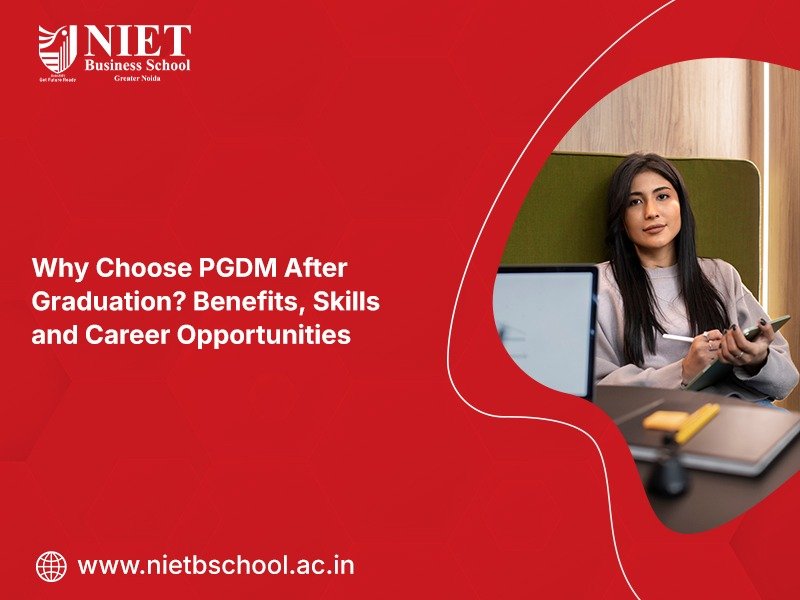
You get a degree when you graduate, but it doesn’t always point you in a direction. If you’re investigating how to turn your bachelor’s degree into a stable and growing career, management education is one of the most practical routes to explore.
Every year, a large number of graduates in India opt for postgraduate management studies to sharpen their business skills, get industry exposure and move into leadership-track roles. What is PGDM? This guide tells you why it’s popular, what you’ll learn and where it can take you.
PGDM is a Post Graduate Diploma in Management. It is a two-year, full-time post-graduate qualification that is usually approved by AICTE (All India Council for Technical Education).
Quick answer: A PGDM course equips graduates with management concepts, business decision-making skills, and workplace competencies through a regularly updated, industry-relevant curriculum.
Here are the major benefits graduates are seeking:
Industry-aligned curriculum: Autonomous colleges can tweak their syllabus quickly, so topics like analytics, marketing and fintech are added sooner.
Hands-on learning: Case studies, live projects, simulations and internships link classroom concepts with the real business world.
Specialization options: Specialize in marketing, finance, human resources, operations or business analytics.
Professional networking: Guest lectures, alumni interactions and corporate events teach you how different industries actually work.
Career support: Training, mock interviews and placement assistance to get you ready for the hiring process.
You can enjoy greater flexibility in your career, as management skills are transferable across industries, allowing you to pursue various job types.
A Post Graduate Diploma in Management (PGDM) is designed from the ground up to keep pace with the rapidly evolving corporate world.
A good management qualification teaches a lot more than theory. Here’s what you can expect to improve:
Critical thinking. You learn how to read data, compare options and make decisions based on facts, not hunches.
Presentation and communication. The group discussions, case presentations and viva sessions will help you to present ideas clearly to teams, clients and seniors.
Leadership and Team Work. Group projects teach you to meet deadlines, work through disagreements, and own the results.
Financial and digital proficiency. Skills to understand budgets, market trends and online resources can now be useful in almost any role, not just finance or IT.
Problem solving. Case-based learning teaches you how to break down a complex business problem into manageable steps.
The PGDM job opportunities are vast as the companies from every sector need people who can plan, analyze and manage. The graduates generally work as business analysts, marketing executives, financial analysts, HR executives, operations managers, supply chain coordinators, sales managers and management consultants.
These types of roles are available across banking and financial services, FMCG, IT and consulting, e-commerce, healthcare and manufacturing and logistics. The first job you get and the salary you earn will depend on your specialization, internships, skills and the company that recruits you, so beware of any college that promises you a fixed package.
Professionals will gain enough experience to either move into senior management, start their own ventures or bring better planning and strategy into the family business.
This path is for graduates from any stream, be it commerce, engineering, science or arts, who want to move into business roles. Eligibility is a bachelor’s degree with minimum percentage as specified by the college.
The admission is generally on the basis of entrance tests such as CAT, XAT, CMAT, MAT or GMAT followed by group discussion and personal interview. Some college also carry out their tests. Work experience can add weightage to your profile but generally freshers are accepted.
Before you take PGDM admission in any course, do compare the institutes on a few practical points. The best PGDM courses can have a wide variation in teaching style, industry exposure and student support.
Make sure to check these things:
AICTE approval, faculty experience, frequency of curriculum updates, internship support, industry interaction and alumni outcome A successful PGDM program should be a blend of classroom learning, real projects, and soft skill training.
If possible, visit the campus, talk to current students and look closely at the placement information instead of just believing advertisements.
If you want practical knowledge about business, flexible career options, and exposure to what employers expect, then choosing PGDM after graduation is a good step. The trick is to match your interests with the right specialization and a good institute.
NIET Business School provides PGDM education focusing on practical learning, industry interaction and skill development to equip students for management roles. For details on specializations, eligibility criteria & admission process, visit NIET Business School (https://www.nietbschool.ac.in) for the latest updates. With the right mentorship and specific objectives, your graduation can be the start of an exciting management career.
Also Read About: PGDM Admission in India: Common Myths About Entrance Exam Scores
1. Is PGDM better than MBA?
Neither is simply better. PGDM is awarded by the autonomous college whereas MBA is awarded by the university. Decide based on curriculum quality, college reputation, and your career goals.
2. Can I do PGDM after any graduation?
Yes. Usually, any graduate from any stream can apply if he/she satisfies the minimum percentage and entrance exam criteria of the college.
3. Which exams are accepted for PGDM admission?
Common Exams are CAT, XAT, CMAT, MAT and GMAT. Some colleges have their tests followed by group discussion and interviews.
4. How long does PGDM take to complete?
It is usually a two-year, full-time course split into terms or semesters, often with a summer internship.
5. Does PGDM require work experience?
Not for most colleges. Freshers are welcome but prior work experience can add value to your profile at the time of selection.
Oct 27, 2026
Oct 27, 2026
Oct 21, 2026
Sep 29, 2026
Sep 28, 2026
Oct 27, 2026
Read More
Oct 27, 2026
Read More
Oct 21, 2026
Read More
Sep 29, 2026
Read More